 Pin this
 My grandmother's cast-iron skillet sits on my stove now, seasoned dark as mahogany from decades of cornbread. I was maybe eight when she first let me pour the batter into that screaming-hot pan, the sizzle hitting my ears before the smell of butter and cornmeal hit my nose. She didn't fuss much over technique; she just knew that golden crust came from that initial kiss of heat, and the moisture came from respecting the batter enough not to overmix it. Making this cornbread became less about following rules and more about understanding why each step mattered.
I made this for my partner during our first winter together, when we were snowed in and running low on groceries. There was something about pulling that golden skillet from the oven while snow piled up outside that felt like we'd created our own small warmth. He spread the honey butter so thick it dripped down the sides, and he ate three pieces before saying a word, which told me everything I needed to know about whether we'd be making it again.
Ingredients
- Yellow cornmeal: This is your backbone, giving that distinctive sandy texture and slight sweetness that makes cornbread unmistakable; stone-ground is worth seeking out if you can find it.
- All-purpose flour: Acts as the structure without overpowering the corn flavor, and it keeps things tender rather than dense.
- Granulated sugar: A modest amount balances the cornmeal's earthiness and prevents the bread from tasting one-dimensional.
- Baking powder and baking soda: These work together to create lift and that fine crumb; don't skip either or you'll end up with something brick-like.
- Whole milk or buttermilk: Buttermilk adds tang that deepens the flavor, but whole milk creates a subtler, more neutral result; pick based on your mood.
- Eggs: They bind everything and add richness without making it heavy.
- Melted butter and vegetable oil: The combination creates moisture and tenderness; butter alone can make it dry, oil alone makes it taste flat.
- Cast-iron skillet and extra butter: The skillet's heat creates that golden, crispy crust that feels like a small miracle, and the butter is what makes that happen.
- Honey and softened butter: The honey butter is where this goes from good cornbread to something people actually crave; the sweetness shouldn't be subtle.
Tired of Takeout? 🥡
Get 10 meals you can make faster than delivery arrives. Seriously.
One email. No spam. Unsubscribe anytime.
Instructions
- Heat your skillet like you mean it:
- Get that 10-inch cast-iron into a 425°F oven and let it sit there while you prep everything else. A cold skillet will give you cakey cornbread; a properly heated one gives you that sizzling edge that becomes crispy perfection.
- Combine your dry ingredients:
- Whisk together the cornmeal, flour, sugar, baking powder, baking soda, and salt in a large bowl, making sure there are no lumps hiding in the corners. This preps the leavening to work evenly throughout.
- Whisk the wet ingredients until smooth:
- In another bowl, combine milk, eggs, melted butter, and vegetable oil until there's no streaking, no separated bits. This emulsified mixture distributes fat evenly through the batter.
- Combine wet and dry with a gentle hand:
- Pour the wet into the dry and stir just until you don't see flour streaks anymore; lumps are your friends here because overmixing develops gluten and makes cornbread tough and rubbery. Stop stirring before you think you should.
- Butter that screaming-hot skillet:
- Pull it from the oven with oven mitts and add 2 tablespoons of butter, tilting and swirling so it coats every surface including the sides. The sizzle tells you it's working.
- Pour and smooth:
- Pour the batter into the buttered skillet and use a spatula to gently even out the top without pressing down. It doesn't need to be perfect; the heat will handle any minor unevenness.
- Bake until golden:
- Put it back in the oven for 20 to 25 minutes; you're looking for a deep golden-brown top and a toothpick that comes out clean from the center. The edges will pull slightly away from the skillet when it's done.
- Make honey butter while you wait:
- Beat softened butter with honey and a tiny pinch of salt until it's fluffy and light, about a minute or two of beating. This creates an airy texture that melts into warm cornbread like it was made for exactly that purpose.
- Cool just enough to handle:
- Let the cornbread sit for 5 to 10 minutes so it firms up enough to slice cleanly without falling apart. Rushing this step means you'll end up with crumbly pieces; patience here pays off.
 Pin this
 There's a moment when you pull cornbread from the oven and the whole kitchen smells like butter and warmth and home, regardless of whether home actually felt that way. That smell is honest; it doesn't lie or pretend. It just says, here, eat this, and everything else can wait for a minute.
Why Cast Iron Matters Here
A cast-iron skillet isn't just a tool for this recipe; it's actually doing chemical work that other pans can't replicate. When metal gets hot enough, it creates a kind of heat distribution and retention that gives you a crust on the bottom and sides without drying out the center. I've tried this in regular cake pans out of necessity, and while it's still edible cornbread, it's missing something crucial. The skillet becomes part of the texture story.
The Honey Butter Secret
Most people make honey butter by just stirring honey into soft butter, and it works fine. But if you actually beat it for a minute or two, you incorporate air, and the texture becomes something lighter and more luxurious. It melts faster into warm cornbread and feels less heavy on the tongue. This is one of those tiny efforts that feels silly while you're doing it but tastes like you knew something most people don't.
When You Want to Customize
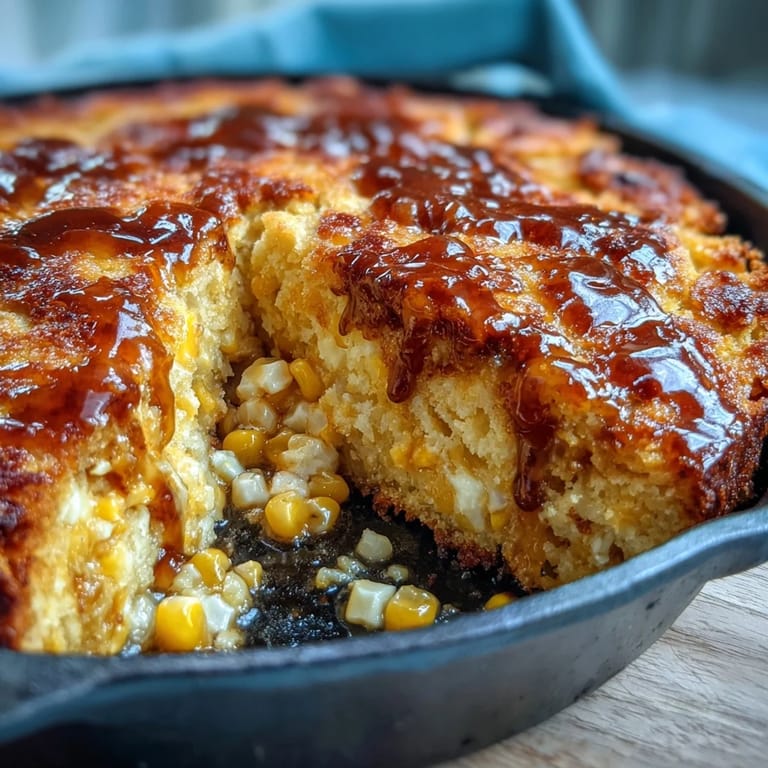
This base cornbread is neutral enough to handle additions without losing its identity. I've made it with corn kernels stirred in, sharp cheddar for savory richness, and once with jalapeños when I was feeling ambitious. The key is not adding so much stuff that you lose the cornbread character, and respecting the batter ratios so everything still bakes evenly. Each addition should feel like an accent to the main event, not a replacement for it.
- Fresh or frozen corn kernels add sweetness and texture without changing bake time.
- Shredded cheddar or sharp cheese works if you stir it in just before pouring, so it's distributed evenly throughout.
- Jalapeños should be minced small and patted dry so they don't release excess moisture that would affect the crumb.
 Pin this
 This cornbread is the kind of thing that disappears quietly from the plate, eaten without ceremony because it doesn't demand attention; it just does its job of being exactly what you needed without asking for credit. Make it once, and you'll understand why people keep cast iron seasoned for decades.
Frequently Asked Recipe Questions
- → What is the best skillet to use?
A 10-inch cast-iron skillet is ideal as it heats evenly and creates a crispy crust.
- → Can I substitute buttermilk?
Yes, using buttermilk adds a subtle tang and extra richness to the batter.
- → How do I make the honey butter?
Whip softened butter with honey and a pinch of salt until smooth and fluffy, then serve warm.
- → How do I know when it’s done baking?
The cornbread is ready when the top is golden and a toothpick inserted comes out clean.
- → Can I add extras to the batter?
Yes, options like corn kernels, shredded cheddar, or chopped jalapeños work well for added texture and flavor.