 Pin this
 The first time I served Korean BBQ nachos at a casual dinner party, I watched my friends' faces light up in that perfect moment when familiarity meets surprise. Someone had brought leftover gochujang from their fridge, and I realized it was begging to meet crispy tortilla chips instead of the usual banchan lineup. What started as kitchen improvisation became the dish everyone asked me to make again, proving that the best recipes sometimes come from happy accidents.
I remember making this for a potluck where everyone was bringing predictable things, and I wanted to shake things up. The gochujang beef sizzled in the skillet while I prepped the vegetables, filling the kitchen with this warm, spicy aroma that had people hovering before we'd even sat down. One bite and the conversation shifted entirely—suddenly everyone wanted the recipe, and I realized I'd stumbled onto something that genuinely made people happy.
Ingredients
- Flank steak or sirloin, thinly sliced (300 g): Thin slices cook quickly and absorb the marinade beautifully; ask your butcher to slice it for you if your knife skills feel shaky.
- Gochujang (2 tbsp): This fermented chili paste is the backbone of the flavor—don't skip it or substitute with sriracha, which tastes completely different.
- Soy sauce (1 tbsp): The saltiness anchors the sweetness of the brown sugar and brings out the savory depth.
- Brown sugar (1 tbsp): A small amount caramelizes on the beef and balances the chili heat with subtle sweetness.
- Sesame oil (2 tsp): Use sparingly; it's potent and nutty, and a little goes a long way to add authentic depth.
- Garlic and ginger (2 cloves garlic, 1 tsp ginger): Fresh, minced small so they distribute evenly through the marinade without overpowering.
- Rice vinegar (1 tsp): A touch of brightness that prevents the marinade from feeling too heavy.
- Tortilla chips (200 g, about 1 large bag): Choose a sturdy brand that won't collapse under toppings; thicker chips hold up best.
- Mozzarella and Korean cheese blend (100 g each): Two cheeses melt at slightly different rates, creating creamy pockets throughout.
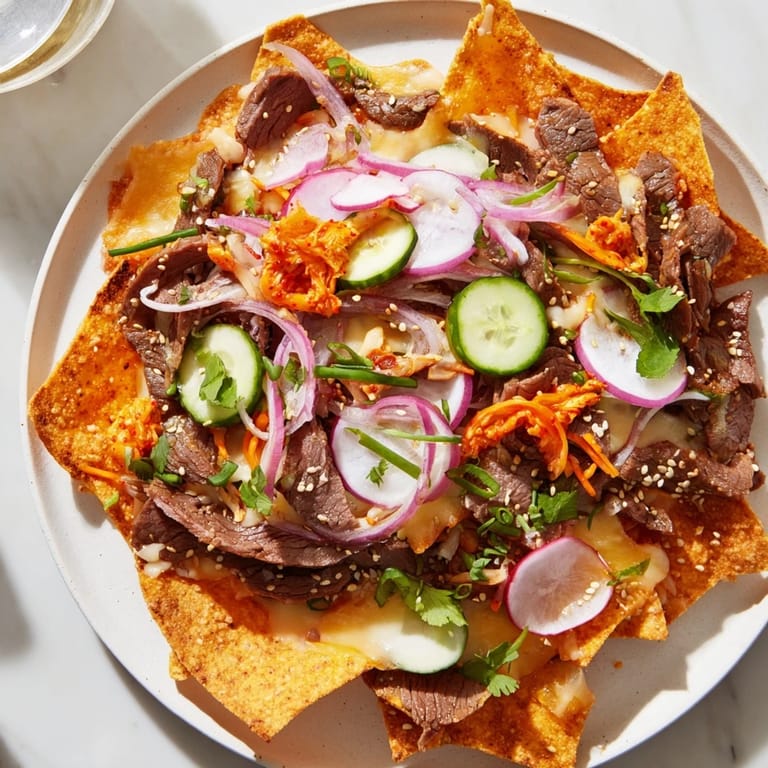
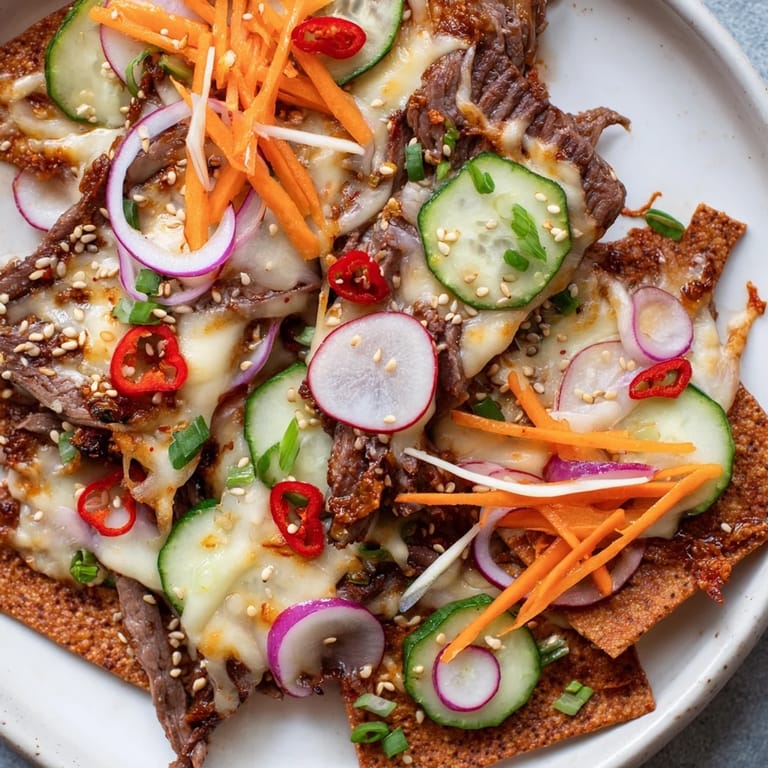
- Fresh vegetables (red onion, carrot, cucumber, scallions): Add these after baking so they stay crisp and provide cool contrast to the warm cheese and beef.
- Toasted sesame seeds (1 tbsp): Toast them yourself in a dry pan for thirty seconds if you have time; they taste livelier than pre-toasted.
- Kimchi and fresh herbs (2 tbsp kimchi, fresh cilantro or shiso): These are the finishing touches that make it feel intentional and elevate the whole dish.
Tired of Takeout? 🥡
Get 10 meals you can make faster than delivery arrives. Seriously.
One email. No spam. Unsubscribe anytime.
Instructions
- Mix the marinade and marinate the beef:
- Combine gochujang, soy sauce, brown sugar, sesame oil, garlic, ginger, rice vinegar, and black pepper in a bowl until smooth. Add your beef slices and toss until coated, then let them sit for at least twenty minutes while you prep everything else.
- Preheat and sear:
- Get your oven to 200°C (400°F) and heat a skillet over medium-high heat until it's hot enough that a drop of water sizzles immediately. Sear the beef in batches for two to three minutes per side until browned and cooked through, then set aside on a plate.
- Build the nacho base:
- Line a baking tray with parchment paper, spread tortilla chips in an even layer, and scatter half the cheese over them. This first layer of cheese acts as a glue to hold everything together.
- Layer and bake:
- Distribute the cooked beef over the cheese, then top with the remaining cheese. Bake for six to eight minutes until the cheese is bubbling at the edges and golden on top.
- Finish with fresh toppings:
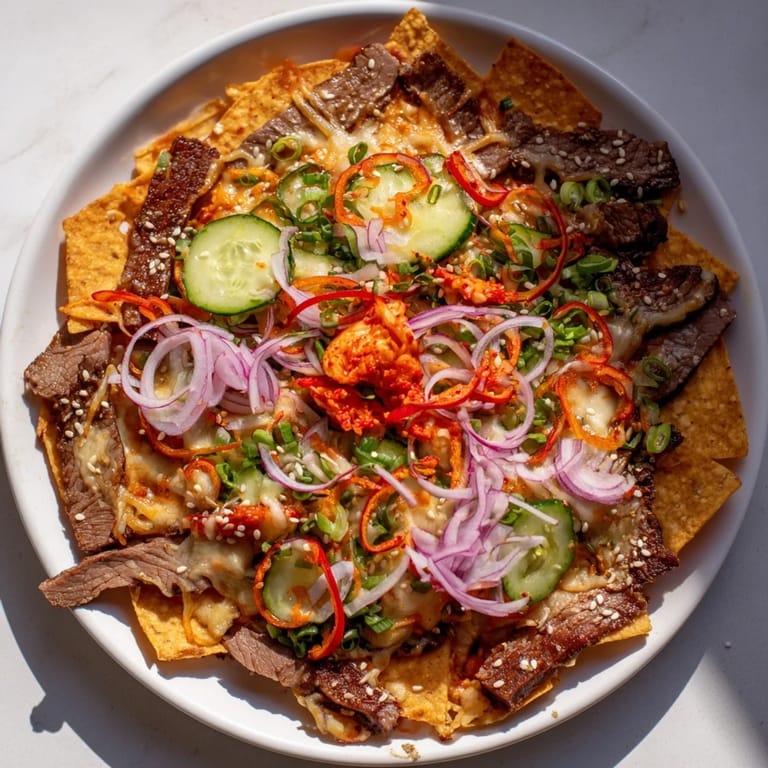
- Remove from the oven and immediately scatter red onion, carrot, cucumber, scallions, and sesame seeds over the hot nachos while the cheese is still soft. Top with chopped kimchi and fresh herbs, drizzle with sriracha mayo or gochujang mayo if you're using it, and serve right away with lime wedges.
 Pin this
 What I love most is that moment when someone tries their first bite and that expression of pleasant confusion crosses their face—Korean flavors and nachos shouldn't work together, but somehow they do. It's the kind of dish that starts conversations and makes people feel like you went to real effort, even though it's honestly quite forgiving.
The Magic of Gochujang
Gochujang is fermented for months, sometimes years, which means it brings this underlying savory complexity that raw chili peppers simply can't match. When it hits hot beef, it caramelizes slightly and deepens in flavor, creating something almost meaty in its own right. I used to think of gochujang as only for bibimbap or stews, but once I realized it was a perfect marinade base, a whole world opened up.
Cheese Strategy
Using two different cheeses might seem fussy, but it actually ensures even melting and prevents a greasy pool in the center. Mozzarella alone can get stringy and separate; Korean cheddar-mozzarella blends have more personality and hold their structure better. If you can't find Korean cheese, a sharp cheddar mixed with regular mozzarella works perfectly fine.
Timing and Temperature
The whole dish comes together in less than an hour, which makes it perfect for unexpected guests or when you want something impressive without the stress. Temperature control is gentler than you'd expect; if your oven is a bit hotter, just watch it closely and pull the tray when the cheese starts to bubble.
- Prep your vegetables while the beef marinates so assembly feels effortless.
- Keep lime wedges nearby—a squeeze at the end brightens everything and cuts through the richness beautifully.
- Leftover nachos don't reheat well, so make only what you'll eat fresh.
 Pin this
 This dish lives in this wonderful space where it feels like you're showing off a bit, but you're really just cooking what you love. Every time I make it, someone asks when I'll do it again.
Frequently Asked Recipe Questions
- → What cut of beef works best for marinating?
Thinly sliced flank steak or sirloin is ideal for quick marinating and even cooking, ensuring tender and flavorful bites.
- → Can I substitute the beef with other proteins?
Yes, grilled chicken or tofu can be used for variation, and marinated mushrooms or jackfruit suit vegetarian preferences.
- → How do I achieve the perfect cheese melt?
Bake the assembled chips and toppings at 200°C (400°F) for 6–8 minutes until the cheese is bubbling and golden.
- → What flavor does gochujang add to the beef?
Gochujang brings a deep, spicy-sweet, and umami-rich profile that enhances the savory marinade.
- → Are there any suggested garnishes to complement the dish?
Chopped kimchi, fresh cilantro or shiso leaves, and a drizzle of spicy mayo elevate freshness and spice, with lime wedges for acidity.