 Pin this
 The snow had been falling sideways all morning when I remembered my neighbor Sarah mentioning this Amish soup recipe she swore by during blizzards. I shuffled to the kitchen in my thickest socks, the house already feeling colder, and decided this was the perfect day to try it. Something about the way she described it—vegetables simmering until they practically melt, cream swirling in at the end like a warm embrace—made it feel exactly right for a day when the world outside had disappeared under white. The pot bubbled away on the stove while I watched the snow pile up against the window, and pretty soon the whole house smelled like thyme and comfort.
Last winter, my sister showed up unexpectedly during a storm with nothing but a bag of groceries and her appetite. We made a double batch of this soup while she told me about her new job, and we ended up eating it standing at the counter because neither of us wanted to move to the table. The way the potatoes had absorbed all that broth, turning tender and creamy without losing their shape, made us both pause between spoonfuls. She asked for the recipe before she even finished her bowl, and now she texts me every time it snows to say shes making it too.
Ingredients
- 1 medium onion, diced: I like yellow onions here because they sweeten up beautifully as they cook, but white onions work perfectly fine if thats what you have
- 2 cloves garlic, minced: Fresh garlic matters—dont use the pre-minced stuff in jars since it can taste bitter after long simmering
- 2 medium carrots, sliced: Slice them about a quarter inch thick so they soften but still have a little bite in the finished soup
- 2 stalks celery, diced: Include some of the leafy tops if your celery has them—they add an extra layer of herbaceous flavor
- 1 bell pepper, chopped: Any color works, but green peppers give this a slightly more traditional Amish flavor profile
- 3 medium potatoes, peeled and diced: Yukon Gold or red potatoes hold their shape better than Russets, which can sometimes fall apart
- 1 cup corn kernels: Frozen corn works perfectly here and actually tastes just as good as fresh in long-simmered soups
- 1 cup green beans, chopped: Fresh green beans are best, but frozen ones work in a pinch—just add them a few minutes later in the simmer
- 6 cups vegetable or chicken broth: Low-sodium broth gives you more control over the final seasoning
- 1 cup heavy cream: Let it come to room temperature while the soup simmers so it incorporates smoothly without separating
- 1 teaspoon dried thyme: Thyme is the backbone of this soups flavor—dont skip it or substitute unless absolutely necessary
- 1 teaspoon dried rosemary: Crush the dried rosemary between your fingers before adding it to release its aromatic oils
- 1 bay leaf: Fish it out before serving, but let it simmer the whole time to deepen the background flavors
- Salt and pepper to taste: Wait until after you add the cream to adjust the seasoning—dairy can mellow saltiness
- 1 tablespoon olive oil: For sautéing the vegetables and building that initial flavor base
- Fresh parsley, chopped: Sprinkle this on right before serving for a pop of color and fresh herbal brightness
Tired of Takeout? 🥡
Get 10 meals you can make faster than delivery arrives. Seriously.
One email. No spam. Unsubscribe anytime.
Instructions
- Build your flavor base:
- Heat olive oil in a large pot over medium heat and add diced onion, cooking about 4 minutes until it turns translucent and starts to smell sweet
- Wake up the garlic:
- Stir in minced garlic and let it cook just 1 minute until fragrant—any longer and it might turn bitter
- Soften the hearty vegetables:
- Add carrots, celery, and bell pepper, cooking 5 to 7 minutes and stirring occasionally until they start to soften and smell amazing
- Add the potatoes and remaining vegetables:
- Toss in potatoes, corn, and green beans, stirring everything together so all the vegetables get coated in those aromatic fats
- Create the soup:
- Pour in broth, add thyme, rosemary, and bay leaf, bring to a boil, then reduce heat and simmer 20 to 25 minutes until vegetables are tender
- Finish with cream:
- Remove bay leaf, stir in heavy cream, and cook 5 more minutes until everything is heated through and slightly thickened
- Season and serve:
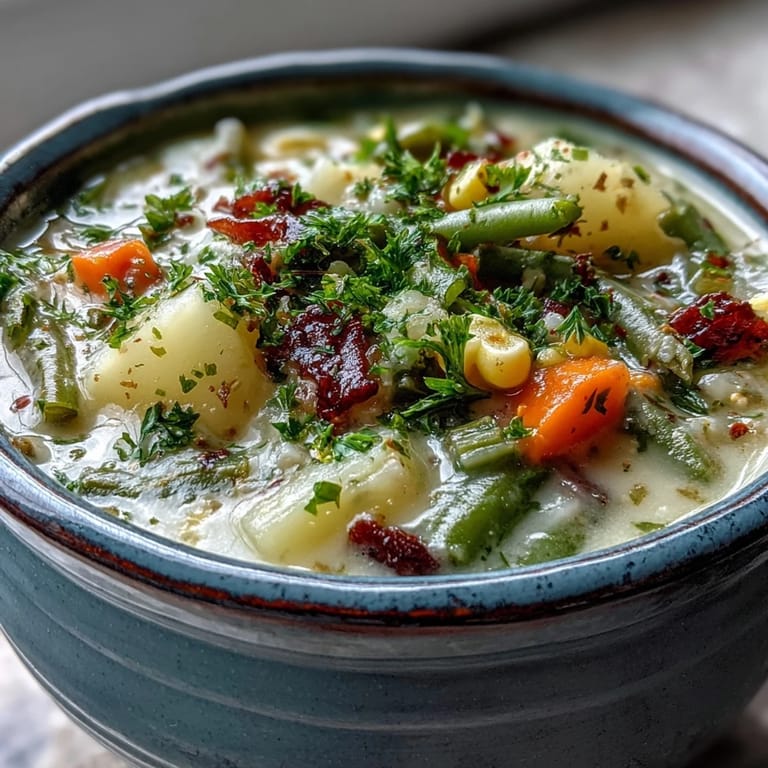
- Taste and add salt and pepper as needed, then serve hot topped with fresh parsley
 Pin this
 This soup has become my go-to whenever someone needs bringing down from a ledge, whether thats a bad day at work or just a February that wont quit. A friend called me last month in tears over something that felt enormous at the time, and by the time she finished her bowl, she was laughing about how shes terrible at chopping onions evenly. Thats the thing about food this comforting—it creates space around whatever is heavy, even just for an hour.
Making It Your Own
The beauty of this soup is how adaptable it is to whatever you have on hand. Ive made it with diced sweet potatoes instead of regular ones, swapped in frozen peas for green beans, and even added diced butternut squash in the fall. Each version turns out slightly different but equally comforting, which I think is exactly what the Amish tradition intended—making something nourishing out of whatever the season provides.
Serving Suggestions
Crusty bread is practically mandatory here—I love tearing off chunks of sourdough to soak up that creamy, vegetable-filled broth. A simple green salad with vinaigrette cuts through the richness nicely, and on really cold nights, a grilled cheese sandwich made with sharp cheddar turns this into the kind of meal that makes you forget winter exists.
Storage and Reheating
This soup keeps beautifully in the refrigerator for up to five days, and I actually think it tastes better on day two or three once the flavors have had more time to meld. Freeze it in quart-sized containers for up to three months, but skip the garnish—add fresh parsley after reheating for the best texture and brightest flavor.
- Let the soup cool completely before freezing to prevent ice crystals from forming
- Reheat gently over medium-low heat, stirring occasionally to prevent the cream from separating
- If the soup seems too thick after freezing, stir in a splash of broth while reheating
 Pin this
 Theres something profoundly satisfying about making soup from scratch, especially when the snow is piling up outside and the world has gone quiet. This recipe has seen me through blizzards, bad days, and Tuesday nights when nothing in the fridge looked like dinner, and I hope it becomes your go-to too.
Frequently Asked Recipe Questions
- → What kind of vegetables can I use in this soup?
This versatile soup welcomes a variety of vegetables. Beyond the recommended onions, garlic, carrots, celery, bell pepper, potatoes, corn, and green beans, feel free to incorporate any leftover produce you have on hand, such as zucchini, spinach, or peas, to customize your bowl.
- → Can I make this soup dairy-free?
Absolutely. To make this a dairy-free option, simply substitute the heavy cream with an unsweetened plant-based cream alternative. Always double-check ingredient labels if you have specific dietary concerns or allergies.
- → Is this soup suitable for vegetarians?
Yes, it is! This soup is vegetarian-friendly as long as you opt for vegetable broth instead of chicken broth. The primary ingredients are plant-based, making it a delicious choice for those following a vegetarian diet.
- → Can I add meat or protein to this dish?
Certainly! For an added protein boost, consider stirring in some cooked chicken, sausage, or even white beans towards the end of the cooking process. This can transform it into an even heartier meal.
- → How long does this soup last and can I freeze it?
This soup keeps well in the refrigerator for 3-4 days. It also freezes beautifully; just ensure it has cooled completely before transferring it to freezer-safe containers. Thaw overnight in the fridge and reheat gently.
- → What is the best way to serve this soup?
Serve this soup hot, garnished with fresh chopped parsley for a bright finish. It's exceptionally delicious when accompanied by crusty bread for dipping, making it a truly satisfying and comforting meal.
- → What tools do I need to prepare this soup?
You'll need a large soup pot for simmering, a cutting board and chef's knife for preparing vegetables, and a wooden spoon or spatula for stirring. A ladle will be useful for serving the finished soup.