 Pin this
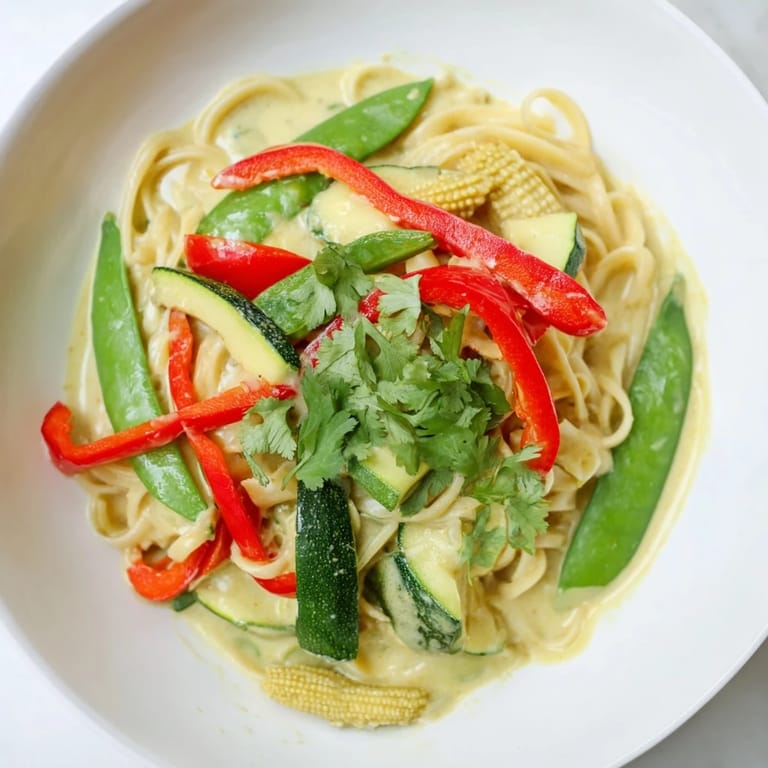
 I discovered Thai curry pasta purely by accident one rainy Tuesday when I had half a box of linguine and a can of coconut milk staring at me from the pantry. My roommate had left behind a jar of green curry paste, and instead of letting it gather dust, I wondered what would happen if I treated pasta like I was making a Thai stir-fry. Twenty minutes later, the kitchen smelled like lemongrass and lime, and I'd stumbled onto something that felt both comforting and thrillingly different.
I made this for friends who were skeptical about curry and pasta in the same bowl, and watching their faces change after that first twirl of the fork was pure joy. One friend kept asking if I'd somehow hidden Thai takeout under the linguine, which became our running joke. Now whenever someone visits, they specifically request it, which says everything about how this unlikely combination just works.
Ingredients
- Linguine or spaghetti (350 g): Use whatever pasta you love—the thinner strands catch the curry sauce better than chunky shapes, and al dente is non-negotiable because you'll simmer it briefly in the sauce.
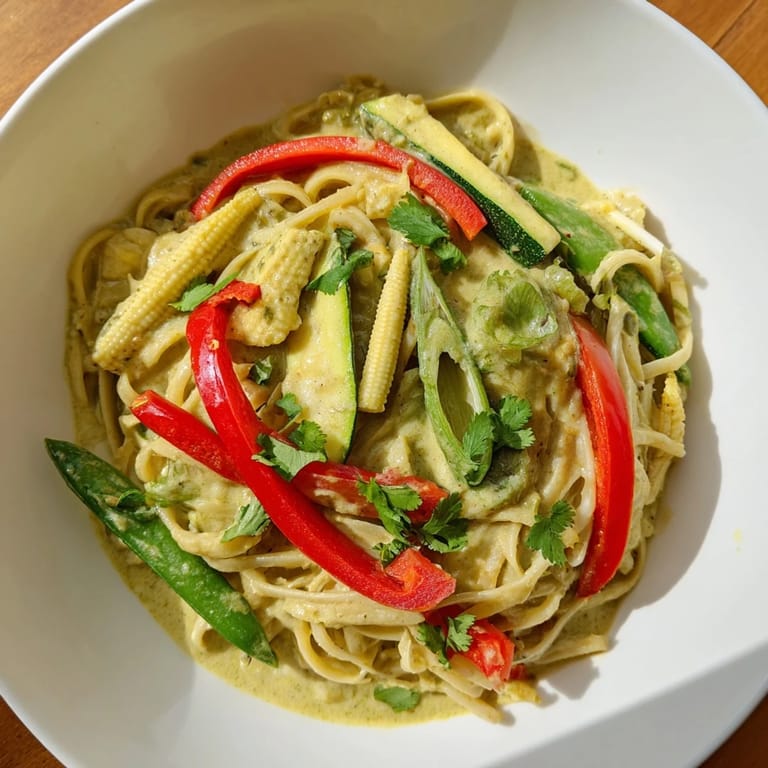
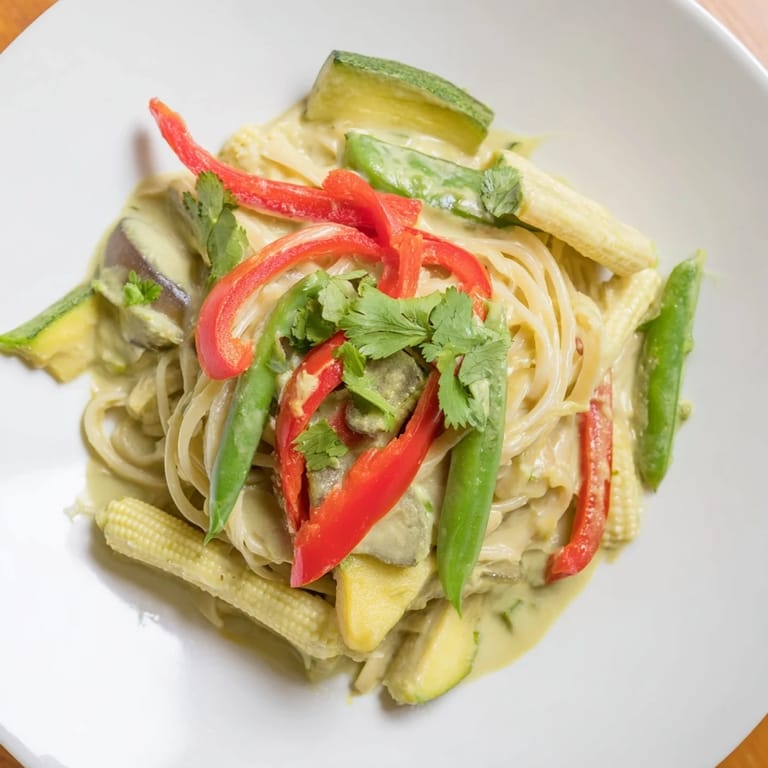
- Red bell pepper and zucchini: These are your vegetable anchors; they stay crisp if you don't overcook them and add sweetness that balances the spice.
- Snap peas and baby corn: Fresh snap peas especially give you that signature crunch, while baby corn adds visual brightness and a subtle sweetness.
- Spring onions and cilantro: These finish the dish with a sharp, herbaceous note that ties everything together and cuts through the richness of the coconut.
- Thai green curry paste (3 tbsp): This is your flavor secret; buy a good brand and check that it's vegan if you're avoiding animal products, as some pastes sneak in shrimp paste.
- Coconut milk (400 ml): Full fat is worth it because the cream brings silkiness that skim versions can't match, coating each strand of pasta beautifully.
- Vegetable oil, soy sauce, brown sugar, ginger, and lime: These supporting players round out the flavor—the ginger adds warmth, lime brings brightness, and brown sugar softens the heat just enough.
Tired of Takeout? 🥡
Get 10 meals you can make faster than delivery arrives. Seriously.
One email. No spam. Unsubscribe anytime.
Instructions
- Get your pasta water ready:
- Boil a large pot of salted water and cook your pasta until just al dente, about two minutes under the package time. Drain it but save that starchy water—it's liquid gold for loosening the sauce later.
- Start your curry base:
- Heat oil in a skillet over medium heat, add the curry paste and ginger, and let them sizzle for a minute until they smell intoxicating. This brief cooking mellows the raw paste and blooms the flavors.
- Build the sauce:
- Pour in your coconut milk along with soy sauce and brown sugar, stirring until the sugar dissolves. Let it bubble gently for a few minutes so everything melds into a cohesive sauce.
- Cook your vegetables:
- Add the firmer vegetables first—bell pepper, zucchini, snap peas, and baby corn—and let them cook for about five minutes until they're tender but still have a bit of snap when you bite them. This is where you can taste and adjust the spice if needed.
- Bring it all together:
- Toss in your drained pasta and that reserved pasta water, stirring everything so each strand gets coated in the creamy curry. Simmer for two to three minutes and watch as the pasta plumps up and absorbs all the aromatic sauce.
- Finish with brightness:
- Stir in the spring onions, cilantro, and a squeeze of fresh lime juice. Taste it now and adjust salt or spice to your preference, because this is your moment to make it exactly right.
 Pin this
 There's a moment in the cooking process, right when you add the pasta to the curry and the kitchen fills with that herbaceous, coconutty steam, where it stops being a recipe and starts feeling like an experience. It's comforting and exciting at once, and that's when I know I've nailed it.
Why This Fusion Works
Pasta and curry shouldn't work as well as they do, but they share something fundamental: both are vehicles for flavor and both have textural appeal. The starch in the pasta absorbs the curry sauce the same way rice does, while the al dente bite of linguine cuts through the richness of the coconut milk. I've found that fusion cooking succeeds when you stop thinking about staying true to one cuisine and instead focus on balance—and this dish has it in spades.
Vegetable Swaps and Flexibility
One night I made this with broccoli and carrots because that's what I had in the crisper drawer, and honestly, it was just as good. The beauty of this recipe is that it works with whatever vegetables are in season or on sale at your market. I've even added thin-sliced green beans, mushrooms, and once—when I was feeling adventurous—thin ribbons of cabbage that added an unexpected crunch.
Making It Your Own
The first time you make this, follow the recipe as written so you understand the baseline flavors. After that, treat it like a canvas. Some people like more spice and add an extra tablespoon of curry paste, while others push the lime juice to bring brightness forward. I've even stirred in a dollop of peanut butter when I wanted something richer, which sounds odd until you taste how the nuttiness echoes through the whole dish.
- Add cooked shrimp, chicken, or crispy tofu if you want more protein without changing the core flavors.
- Drizzle with a squeeze of lime and scatter with roasted cashews or peanuts for textural contrast that feels almost decadent.
- Make it vegan by double-checking that your curry paste has no fish or shrimp sauce lurking in the ingredient list.
 Pin this
 This dish has become my answer when someone asks what to cook for people with adventurous palates who still want something satisfying. It's the kind of meal that makes you feel like you've done something special without spending hours in the kitchen.
Frequently Asked Recipe Questions
- → What pasta types work best with this dish?
Linguine or spaghetti work well, as their shapes hold the creamy sauce nicely while maintaining texture.
- → Can this dish be made vegan?
Yes, ensure the green curry paste contains no shrimp or fish sauce, and use vegetable oil instead of animal fats.
- → How can I adjust the spice level?
Modify the amount of green curry paste used or add sliced red chili for extra heat according to preference.
- → What vegetables can substitute the listed ones?
Broccoli, carrots, or snap peas make excellent alternatives, maintaining the crisp texture and vibrant flavors.
- → How to ensure pasta stays tender but firm?
Cook pasta until al dente as per package instructions and reserve some pasta water to adjust sauce consistency.