 Pin this
 My coworker Sarah brought sushi bake to a potluck last spring, and I watched people go back for thirds while the actual sushi platter sat untouched. There was something liberating about it—all the flavors and textures you love about sushi, but served warm from a casserole dish, no rolling skills required. I went home that night determined to figure out how she made it, and after a few kitchen experiments, I realized the magic was in the layers and the contrast between creamy, flaky, and crisp.
I made this for my family last month when my sister visited, and my dad—who swears he doesn't like anything "fancy"—ate two large slices and asked if I'd make it again next Sunday. That's when I knew this recipe had won him over: it felt adventurous but tasted comforting, sophisticated but unpretentious.
Ingredients
- Sushi rice: Use actual sushi rice if you can find it; the slightly sticky texture is what holds the casserole together and keeps it from falling apart when you slice it.
- Rice vinegar, sugar, and salt: This trio seasons the rice properly—don't skip the vinegar or your base will taste bland and one-dimensional.
- Salmon fillet: Fresh and skinless works best; the gentle baking keeps it moist and flaky rather than turning it into a dense brick.
- Soy sauce and sesame oil: These two ingredients add umami depth to the salmon before baking, making it taste more intentional.
- Cream cheese and Kewpie mayonnaise: The combination creates a luxurious binding layer that feels indulgent without being heavy; Kewpie is slightly sweeter and creamier than regular mayo, so it's worth seeking out.
- Sriracha: Optional but recommended—it adds a whisper of heat that makes all the other flavors pop without overpowering them.
- Avocado: Add this right before serving so it stays fresh and doesn't turn gray or mushy.
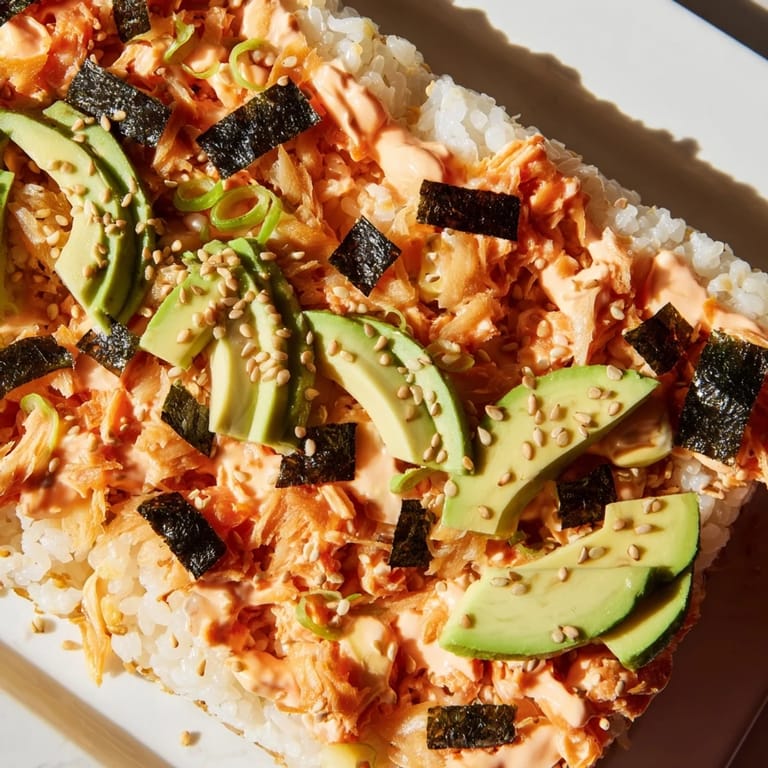
- Nori: Cutting it into small squares instead of strips lets every bite have a hint of that toasted seaweed flavor without overwhelming anything else.
- Sesame seeds and spring onions: These are your final flourishes—they add texture and brightness that make the dish feel finished.
Tired of Takeout? 🥡
Get 10 meals you can make faster than delivery arrives. Seriously.
One email. No spam. Unsubscribe anytime.
Instructions
- Cook the sushi rice properly:
- Rinse your rice until the water runs clear—this removes excess starch and keeps the rice from clumping into a sad, gluey mess. Combine with the water, bring to a boil, cover, and simmer for 15 minutes on low, then let it sit covered for 10 minutes while you prep everything else.
- Season the rice while it's warm:
- Mix the rice vinegar, sugar, and salt together, then stir it into the hot rice and fluff everything gently with a fork. Spread it evenly into your greased 9x13-inch baking dish—this is your foundation, so take a moment to make sure it's level.
- Prepare the salmon:
- Place the fillet on a parchment-lined tray, brush it with soy sauce and sesame oil, sprinkle black pepper over it, and bake at 400°F for 12–15 minutes until it's cooked through but still moist. Once it cools slightly, flake it apart with a fork into medium-sized pieces so it distributes evenly.
- Make the creamy salmon layer:
- Combine the softened cream cheese, mayonnaise, sriracha if you're using it, and lemon juice in a bowl and mix until smooth and spreadable. Fold in your flaked salmon gently so the pieces stay visible and don't disappear into the filling.
- Assemble and bake:
- Spread the salmon mixture evenly over your rice layer, then slide the whole dish into the oven for 10 minutes at 400°F until it's warmed through and the top looks slightly golden. You're not trying to bake it long—just enough to marry the layers and warm everything through.
- Top and serve:
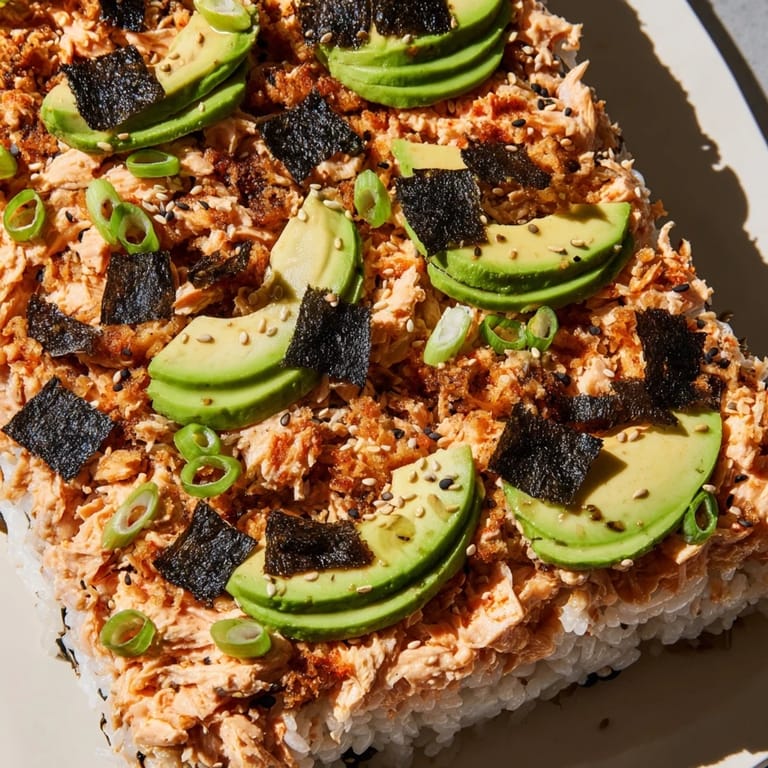
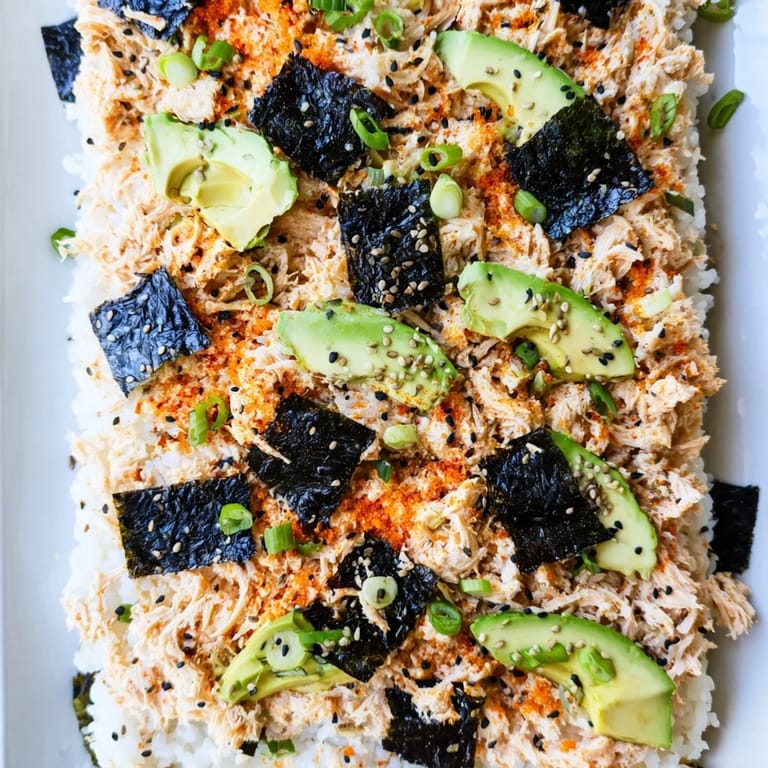
- Slice while it's still warm, then top each piece with fresh avocado slices, nori squares, toasted sesame seeds, and spring onions. Serve immediately with soy sauce, pickled ginger, and wasabi on the side so everyone can customize their own.
 Pin this
 The moment that stuck with me was when my neighbor—who brought her teenage daughter over for dinner—watched us slice into the casserole and saw all those perfect layers intact. Her daughter asked for the recipe immediately, which felt like a small victory: I'd made something that looked restaurant-quality but felt approachable enough for a home kitchen.
Why This Casserole Format Works
Baking sushi instead of rolling it removes the technical barrier that stops most people from making sushi at home. You get all the textural contrast—creamy avocado, flaky salmon, crispy nori, nutty sesame—without needing steady hands or a bamboo mat. The warm rice also brings out flavors that cold sushi sometimes misses, and the whole thing feels more forgiving because you're building in layers rather than executing precision rolls.
Customize It Your Way
I've made this with cooked crab meat on a night when I wanted something slightly different, and with canned tuna when fresh salmon wasn't in the budget—both were delicious. The formula works because the creamy mayo-based layer protects the protein and keeps everything moist, so you have more flexibility than you might think. Some nights I add a tablespoon of panko breadcrumbs before the final bake for extra crunch, and other times I keep it simple and let the nori provide all the texture.
Pairing and Serving Suggestions
This dish pairs beautifully with crisp, dry white wines like Sauvignon Blanc, or if you want to stay in the Japanese tradition, chilled sake is perfect. Serve it with pickled ginger and wasabi on the side so your guests can adjust the heat and tang to their taste, which turns dinner into something interactive and fun. A simple cucumber salad or miso soup alongside it rounds everything out without making the meal feel heavy.
- Let the casserole cool for 2–3 minutes after baking so it holds together when you slice it, but serve it while it's still warm enough that the rice is soft.
- If you're making this ahead, assemble it completely except for the avocado and nori, refrigerate it, then bake it fresh when you're ready to serve.
- Cut into generous squares so each slice has distinct layers—it looks more impressive and tastes better when everything stays separated.
 Pin this
 This recipe reminds me why I love cooking: it takes something that feels intimidating and makes it simple, without losing any of the joy that made you want to make it in the first place. Your friends and family will remember the meal, not the effort it took.
Frequently Asked Recipe Questions
- → What type of rice is best for this dish?
Sushi rice is ideal due to its sticky texture and ability to hold flavors when layered and baked.
- → Can I substitute the salmon with other seafood?
Yes, cooked crab meat, canned tuna, or cooked shrimp work well as alternatives.
- → How do I ensure creamy texture in the salmon layer?
Mix softened cream cheese with mayonnaise, sriracha, and lemon juice before folding in flaked salmon for smooth consistency.
- → What toppings add crunch and flavor?
Fresh avocado slices, roasted nori squares, toasted sesame seeds, and thinly sliced spring onions enhance texture and taste.
- → Is there a recommended serving suggestion?
Serve warm with soy sauce for dipping, alongside pickled ginger and wasabi for added layers of flavor.
- → Can this dish be prepared in advance?
Yes, you can prepare the layers ahead, refrigerate, and bake just before serving to enjoy fresh warmth.