 Pin this
 I used to think tuna belonged only in sandwiches until a neighbor handed me a can and said, "Trust me, just toss it with hot pasta." That evening I stood at the stove with garlic sizzling in olive oil, lemon juice pooling in a small bowl, and spaghetti bubbling away. The smell alone made me understand why Italians have been doing this for generations. It became my go-to when the fridge looked empty but I still wanted something that tasted like I cared.
The first time I made this for friends, I apologized in advance because it felt too simple. But then I watched them twirl their forks and go quiet, the kind of quiet that means the food is doing all the talking. One of them asked for the recipe before she even finished her plate. I realized then that sometimes the best meals are the ones that don't try too hard.
Ingredients
- Spaghetti: Use dried pasta cooked just until al dente so it holds up when tossed with the sauce and doesn't turn mushy.
- Olive oil: This is your base, so reach for something decent because you'll taste it in every bite.
- Garlic: Slice it thin and watch it closely in the pan, burnt garlic will ruin the whole dish in seconds.
- Lemon: Both the zest and juice bring brightness that cuts through the richness of the tuna and oil.
- Canned tuna in olive oil: The oil-packed kind is softer and more flavorful than water-packed, it makes a real difference here.
- Crushed red pepper flakes: Optional but worth it if you like a gentle warmth threading through the dish.
- Fresh flat-leaf parsley: Adds a fresh herbal note that ties everything together at the end.
- Pasta cooking water: Starchy and salty, it helps the sauce cling to the noodles like it was always meant to be there.
- Salt and black pepper: Season at the end once you taste, the tuna and pasta water already bring some saltiness.
Tired of Takeout? 🥡
Get 10 meals you can make faster than delivery arrives. Seriously.
One email. No spam. Unsubscribe anytime.
Instructions
- Boil the pasta:
- Bring a large pot of salted water to a rolling boil and cook the spaghetti until it still has a little bite. Before you drain it, scoop out a mugful of that starchy water and set it aside.
- Cook the garlic:
- Heat olive oil in a large skillet over medium heat and add the sliced garlic. Let it turn golden and fragrant, but pull it off the heat before it browns.
- Add the tuna and lemon:
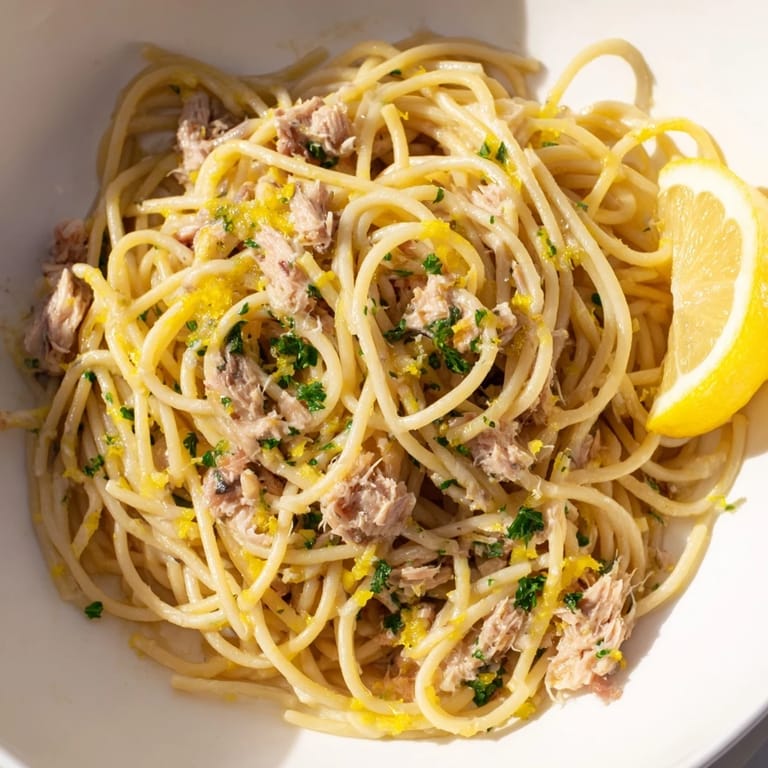
- Stir in the drained tuna, breaking it gently with your spoon so it stays in tender flakes. Toss in the lemon zest, juice, and red pepper flakes if you're using them, then cook for a couple of minutes until everything smells bright and garlicky.
- Toss with pasta:
- Add the drained spaghetti straight into the skillet and toss it all together. Drizzle in the reserved pasta water a little at a time until the sauce coats the noodles without pooling at the bottom.
- Finish and serve:
- Stir in the chopped parsley and taste for salt and pepper. Plate it up, scatter more parsley on top, and serve with lemon wedges on the side for anyone who wants an extra squeeze.
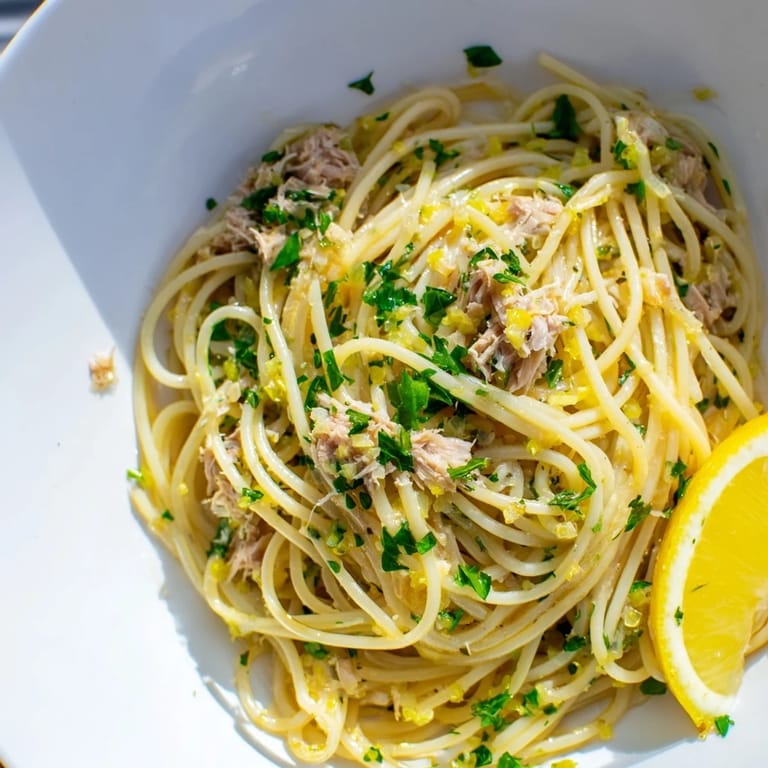 Pin this
 There was a rainy Tuesday when I made this alone with the windows fogged up and the kitchen warm. I ate it straight from the skillet with a glass of cold white wine and thought about how food doesn't need an occasion to feel special. Sometimes it just needs lemon, garlic, and a little bit of attention.
What to Do with Leftovers
This pasta is best eaten right away, but if you do have leftovers, store them in the fridge and reheat gently in a skillet with a splash of water or olive oil. The lemon flavor will mellow overnight, so squeeze a little fresh juice over the top before you eat it again. I've also eaten it cold straight from the container, and honestly it still works.
Ways to Make It Your Own
I sometimes throw in a handful of halved cherry tomatoes with the tuna for little bursts of sweetness. Capers are incredible here too, salty and briny in all the right ways. If you want it creamier, stir in a spoonful of mascarpone or cream cheese at the end. One time I added spinach because I had it wilting in the cridge, and it turned into a whole new version I still make on repeat.
Serving Suggestions
This dish doesn't need much on the side because it's already balanced and satisfying. A simple green salad with a sharp vinaigrette cuts through the richness nicely. Crusty bread for mopping up any leftover sauce is never a bad idea. I usually pour a glass of something crisp and white, Pinot Grigio or Sauvignon Blanc, and call it dinner.
- Serve it with a side of roasted vegetables if you want more color on the plate.
- Top with grated Parmesan only if you're okay breaking the no-cheese-with-fish rule, I won't tell.
- Pair it with garlic bread if you're feeding a crowd and want something hearty.
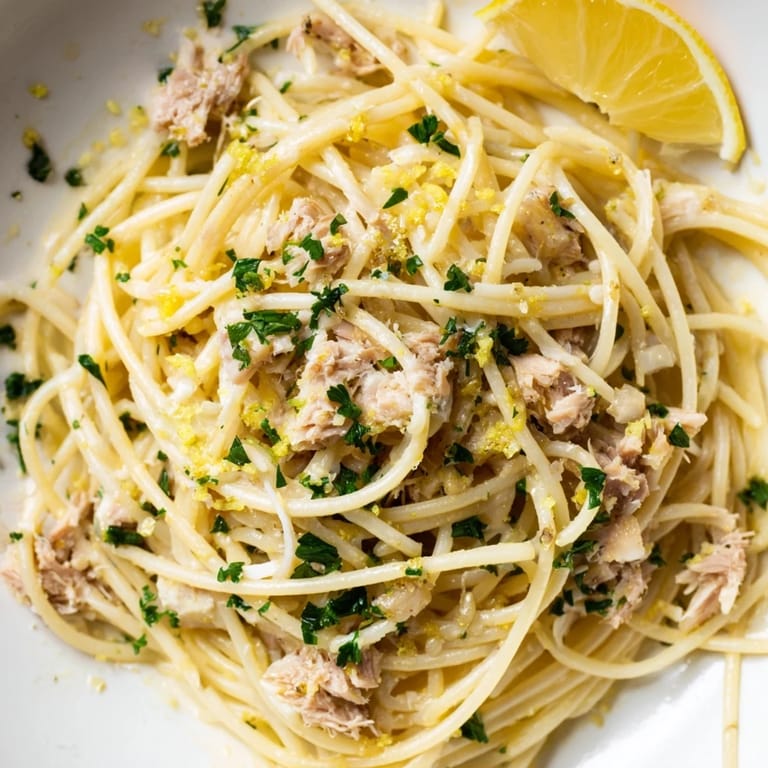 Pin this
 This recipe taught me that the best dinners don't always come from complicated techniques or long ingredient lists. Sometimes all you need is a hot pan, a few bright flavors, and the willingness to trust that simple can be more than enough.
Frequently Asked Recipe Questions
- → Can I use fresh tuna instead of canned?
Fresh tuna can be used but requires quick searing to keep it tender. For this dish, flaky canned tuna blends well with the sauce and cooks evenly.
- → How do I prevent the garlic from burning?
Cook the garlic over medium heat and watch carefully; stirring frequently ensures it becomes fragrant without browning or bitterness.
- → What type of pasta water should I reserve?
Reserve a small amount of the salty pasta cooking water before draining; its starchiness helps the sauce cling to the spaghetti.
- → Can I add heat to the dish?
Yes, include crushed red pepper flakes while cooking the sauce to add a gentle spicy note that complements the lemon and tuna.
- → What wine pairs well with this dish?
A crisp white wine like Pinot Grigio or Sauvignon Blanc balances the zesty citrus and savory tuna flavors perfectly.
- → How can I boost the sauce’s richness?
Adding capers or halved cherry tomatoes gives an extra layer of flavor and richness to the sauce, enhancing the overall taste.