 Pin this
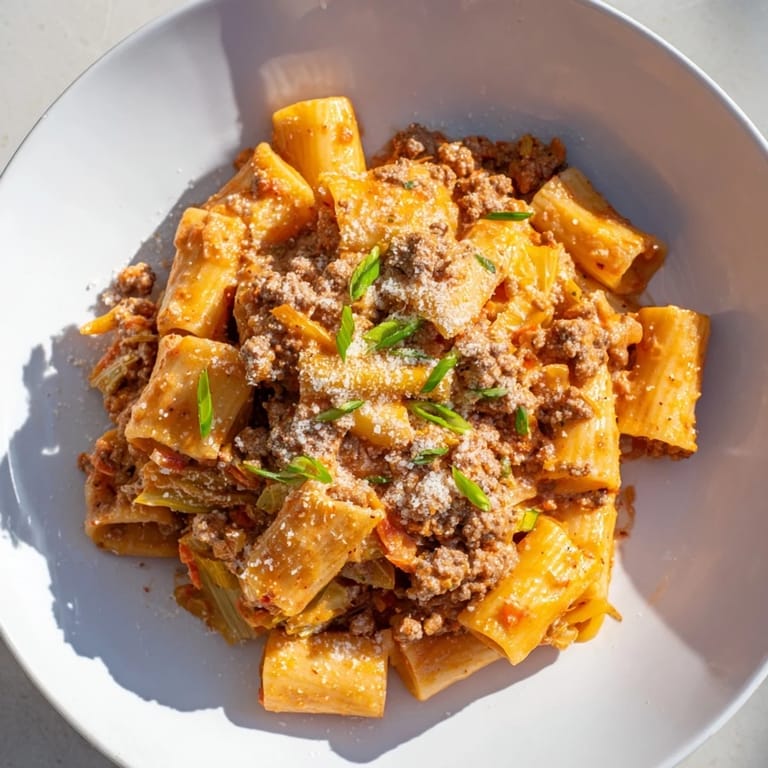
 I stumbled into this dish by accident on a Tuesday night, staring at a jar of kimchi in one hand and leftover ground pork in the other, wondering if my Italian grandmother would forgive me for what I was about to do. The kitchen smelled like garlic and possibility, so I threw caution aside and started building a ragu the way I knew how—soffritto, meat, tomatoes—but with a spicy Korean twist that completely rewired what I thought pasta could be. That first forkful was a revelation: umami-rich, creamy, spicy in all the right places, and absolutely nothing like the recipes in any cookbook I owned.
My partner came home mid-cook and wrinkled their nose at the kimchi—until I let them taste the sauce. They stole a spoon halfway through simmering and never gave it back, just kept tasting and nodding, and I knew I'd created something worth repeating.
Ingredients
- Ground pork (300 g): Use a fattier cut if you can find it; the richness melts into the sauce and makes everything silkier.
- Napa cabbage kimchi (200 g, chopped): Don't be shy with it—the fermented funk is what makes this sing, and the juice is just as important as the solids.
- Onion, carrot, celery (the holy trinity): Chop them small so they dissolve into the sauce and build a proper flavor foundation.
- Crushed tomatoes (400 g can): San Marzano if your budget allows, but any good canned tomatoes work—fresh ones add too much water.
- Heavy cream (120 ml): This is what transforms ragu into something luxurious; coconut cream works beautifully if you want dairy-free.
- Gochugaru (1 tsp, optional): Korean chili flakes add heat without overpowering; taste as you go and adjust to your threshold.
- Soy sauce (1 tbsp): This deepens the umami in ways tomato alone cannot.
- Rigatoni or penne (350 g): Tubes catch sauce better than strands; the pasta shape actually matters here.
- Garlic, scallions, Parmesan: Don't skip the aromatics—they're the finishing notes that make people close their eyes on the first bite.
Tired of Takeout? 🥡
Get 10 meals you can make faster than delivery arrives. Seriously.
One email. No spam. Unsubscribe anytime.
Instructions
- Build your base:
- Heat olive oil until it shimmers, then add onion, carrot, and celery. Let them soften for five minutes, listening for that gentle sizzle that tells you the pan is hot enough. The vegetables should turn translucent and smell sweet, not burnt.
- Wake up the garlic:
- Add minced garlic and stir for exactly one minute—any longer and it turns bitter. Your nose will know when it's ready.
- Brown the meat:
- Crumble the pork into the pan and let it sit for a minute before stirring. This gives it a chance to develop color and depth, not just cook through.
- Embrace the kimchi:
- Stir in chopped kimchi and its juice, letting it soften for three to four minutes. The kitchen will smell funky and alive and completely different from traditional ragu.
- Simmer into depth:
- Add tomatoes, soy sauce, gochugaru, and sugar. Let this bubble gently for fifteen to twenty minutes, stirring occasionally, until the sauce thickens enough to coat the back of a spoon and the flavors meld into something greater than their parts.
- Cook pasta in parallel:
- While the sauce simmers, get pasta water boiling and cook your pasta to al dente—it should have a slight resistance when you bite it. Save a mug of that starchy water before you drain.
- Cream it together:
- Reduce heat to low, then gently stir in cream and some reserved pasta water. The sauce should become silky and coat each strand without looking greasy.
- Bring them together:
- Toss cooked pasta into the ragu, adding more pasta water if needed to loosen it up. The starch in the water is your secret weapon for a sauce that clings instead of pooling at the bottom of the bowl.
- Finish and serve:
- Scatter scallions across the top and a handful of Parmesan if you're using it. Eat while it's hot, with bread nearby for soaking up every drop.
 Pin this
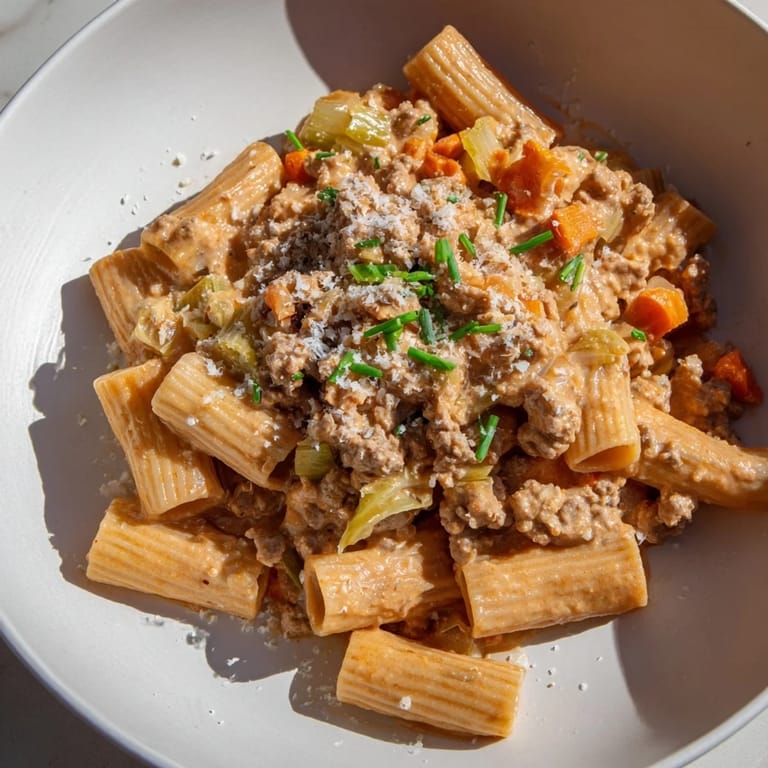
 There's a moment after the cream hits the simmering ragu when the whole sauce turns a dusty rose-pink, and it's genuinely beautiful—a visual proof that something unexpected and wonderful just happened in your pot.
Why Kimchi Changes Everything
Kimchi brings something that tomatoes alone cannot: a living funk from fermentation that sits underneath everything else like a bass note. It's sour, funky, spicy, and umami all at once, which means you end up with a sauce that tastes deeper and more complex than the sum of its ingredients. Once you understand how that works, you start thinking about fermented ingredients differently—they're not toppings or afterthoughts, they're flavor multipliers that deserve their own respect.
On Cream and Richness
Italian ragu purists will add butter at the end; this version adds cream instead, which softens the spice from the gochugaru and kimchi while adding a velvety mouthfeel that makes the whole thing feel indulgent. The cream doesn't mask the other flavors—it just lets them bloom differently, the way a good bass line makes the whole song richer. If dairy isn't your thing, coconut cream does something similar, adding sweetness that plays beautifully against the spice.
Variations and Flexibility
This dish is more forgiving than it looks. Use beef instead of pork if that's what you have. Swap the cream for coconut milk for something lighter and slightly sweet, or use oat milk if you need dairy-free. The gochugaru is optional if you're sensitive to heat—the kimchi itself brings plenty of kick. Some nights I add a splash of something acidic near the end, like a squeeze of lime or a glug of rice vinegar, just to brighten everything up.
- Make it vegetarian with plant-based ground meat and let it cook a few minutes longer to develop flavor.
- Add mushrooms (cremini or shiitake) to the soffritto for extra umami and substance.
- A dollop of gochujang stirred in at the end pushes the Korean flavors even further.
 Pin this
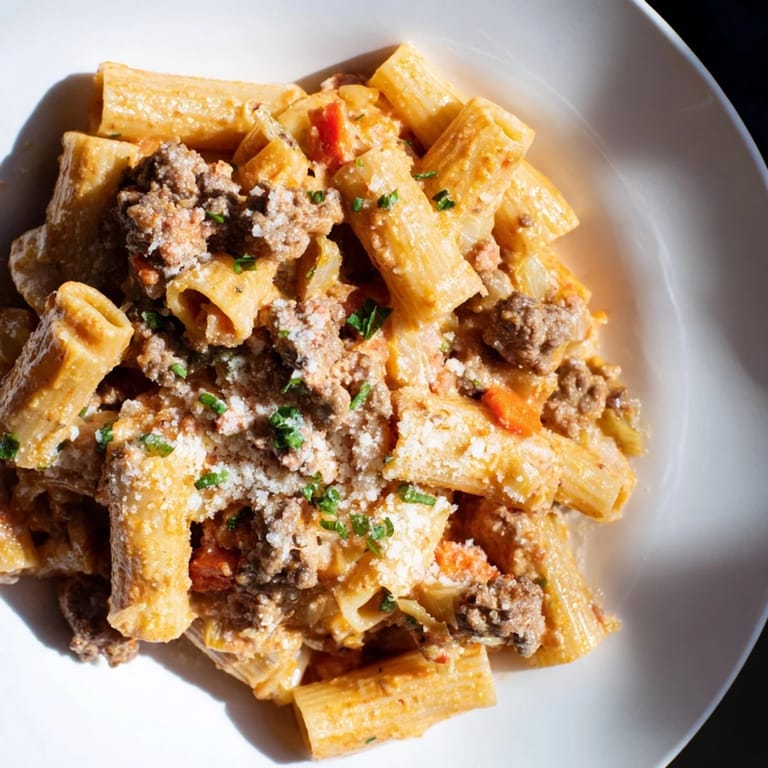
 This is the kind of recipe that reminds you why cooking is worth doing: it takes something familiar and something unexpected and somehow makes them belong together. Once you try it, you'll be looking for other ways to blend these two kitchens.
Frequently Asked Recipe Questions
- → What meats work best in this dish?
Ground pork or beef blends well, offering rich flavor and texture. A 50/50 mix can balance taste and fat content.
- → Can I adjust the spice level?
Yes, modify the gochugaru amount or kimchi quantity to suit your preferred heat level.
- → How do I achieve a creamy sauce?
Stir in heavy or plant-based cream and reserved pasta water after simmering to create a silky, rich sauce.
- → What pasta type is recommended?
Rigatoni or penne hold the sauce well due to their ridges and tubular shape.
- → Are there dairy-free options?
Replace heavy cream with coconut or plant-based cream and omit Parmesan or use a vegan alternative.
- → What sides complement this dish?
A crisp salad or steamed vegetables balance the rich and spicy flavors nicely.