 Pin this
 There's something about the sizzle of shrimp hitting hot oil that pulls me back to a Wednesday night when I needed dinner on the table in twenty minutes flat. A friend had just dropped by unexpectedly, and instead of ordering takeout, I remembered this sauce—honey, garlic, ginger, all coming together in this glossy glaze that coats each shrimp like edible silk. It's become my go-to when I want to feel like I've spent hours in the kitchen when really, I've barely broken a sweat.
I learned this recipe during one of those phases where I was trying to prove to myself that I could cook something that wasn't pasta. My partner at the time was skeptical about seafood, but one bite of this honey garlic glaze changed everything—suddenly they were asking if I could make it again tomorrow, then the next week, then became the person requesting it at dinners. That's when I knew it was something special.
Ingredients
- Large shrimp (1 lb, peeled and deveined): Fresh or frozen works equally well; just thaw the frozen ones gently under cool water and pat them completely dry so they get that beautiful sear instead of steaming.
- Honey (1/3 cup): This is your sweetness and also your glaze—it caramelizes slightly in the heat and turns the sauce silky rather than sticky, so don't skimp on quality here.
- Low-sodium soy sauce (1/4 cup): The salt backbone; low-sodium lets you control the seasoning rather than getting knocked over by saltiness.
- Garlic (4 cloves, minced): Mince it fresh if you can; the aroma that hits your kitchen is half the pleasure of this dish.
- Fresh ginger (1 tbsp, grated): This adds a warmth and slight bite that keeps the sauce from feeling one-dimensional—it's the secret handshake of the whole recipe.
- Rice vinegar (1 tbsp, optional): A splash of acidity cuts through the sweetness and brings brightness; I never skip it anymore.
- Crushed red pepper flakes (1/2 tsp, optional): For when you want a gentle heat that whispers instead of shouts.
- Vegetable or sesame oil (1 tbsp): High heat oil for the initial sear; sesame oil adds deeper flavor if that's what you're after.
- Green onions (2 tbsp, sliced) and sesame seeds (1 tsp, toasted): These are the finish line—brightness and crunch that make the dish feel intentional.
- Steamed rice or cooked noodles: Your canvas; they soak up that glaze and turn into the best part.
Tired of Takeout? 🥡
Get 10 meals you can make faster than delivery arrives. Seriously.
One email. No spam. Unsubscribe anytime.
Instructions
- Whisk your sauce first:
- In a bowl, combine the honey, soy sauce, minced garlic, grated ginger, rice vinegar, and red pepper flakes. Give it a good whisk so everything melds together smoothly and the garlic doesn't clump. Set it aside and forget about it for now.
- Prep your shrimp:
- Pat them dry with paper towels—this is the step that separates a sear from a steam, and it matters more than you'd think. Season generously with salt and pepper, then let them sit for a minute while you finish getting ready.
- Get your pan screaming hot:
- Pour oil into a large skillet and crank the heat to medium-high. You want it hot enough that when you add the shrimp, they sizzle immediately and start turning opaque at the edges.
- Sear the shrimp fast:
- Lay them in a single layer and don't touch them for a minute—let them get a golden kiss on one side. Flip and give the other side another minute, just until they're blushing pink. If your pan is crowded, work in batches; rushed shrimp is overcooked shrimp.
- Pour in the glaze:
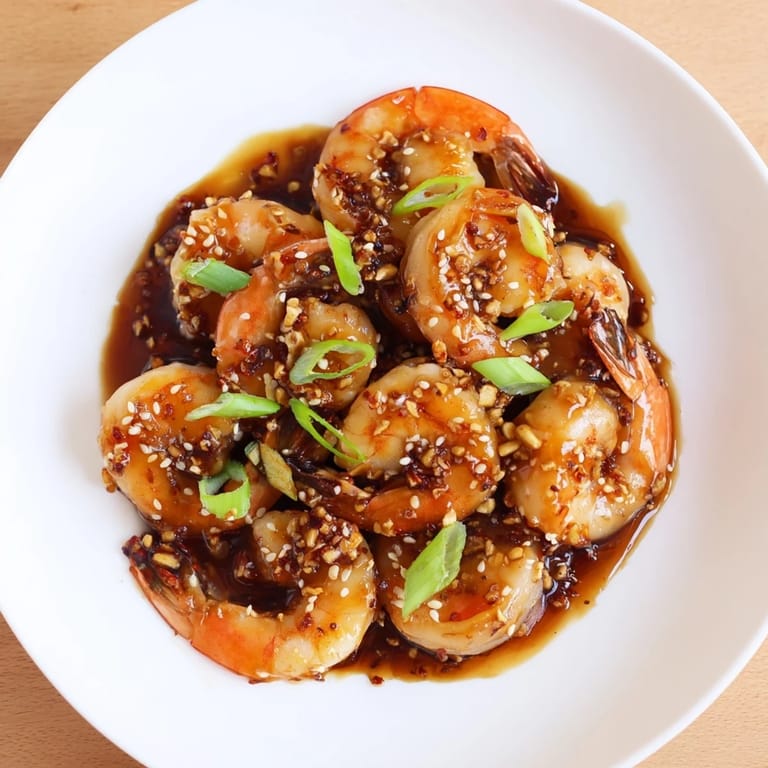
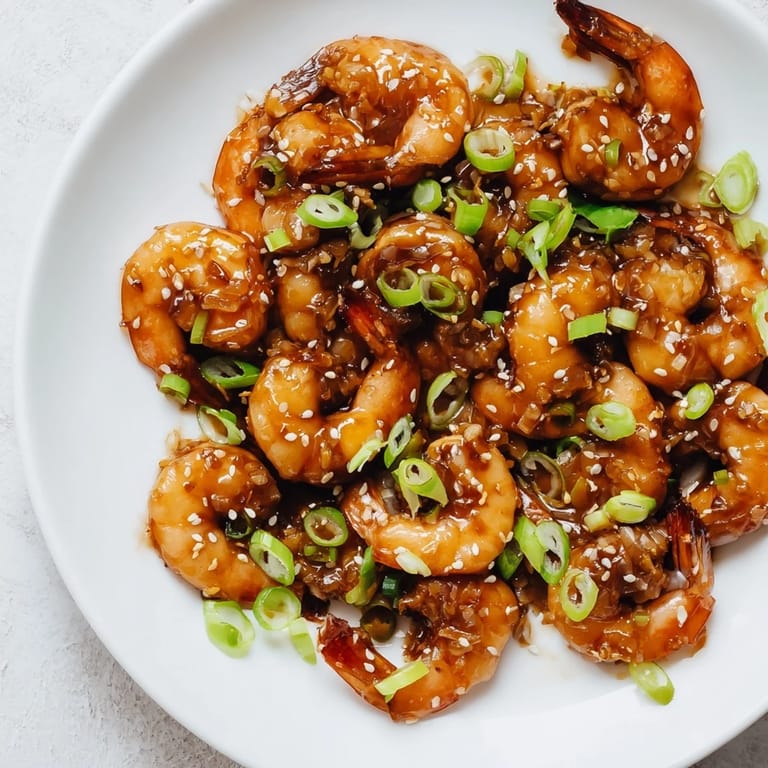
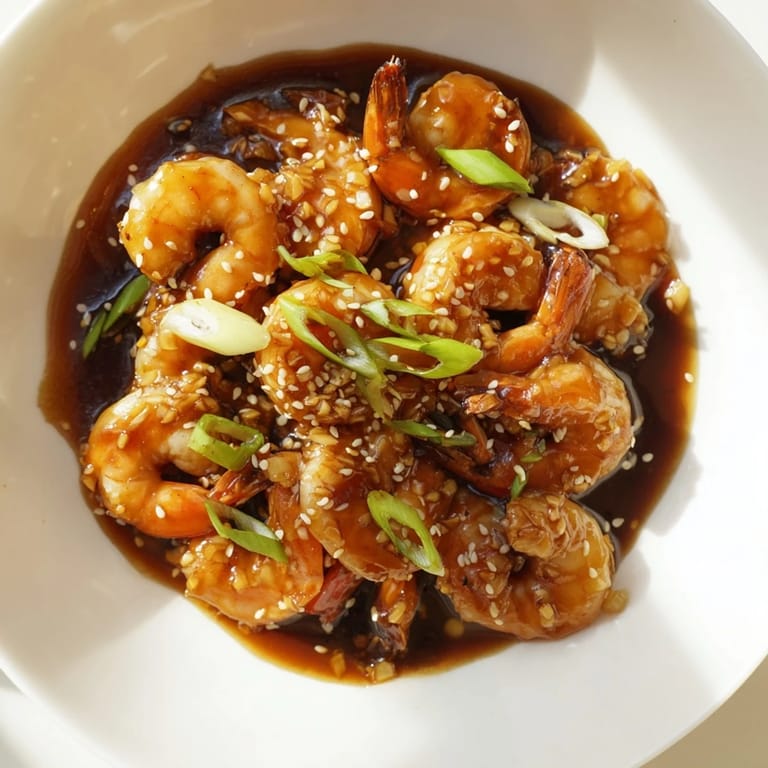
- Add your sauce to the pan and stir everything together gently. Watch as it bubbles and thickens, coating each shrimp like a glossy shell. This takes maybe two to three minutes, and the aroma will convince you to eat it faster than you planned.
- Finish and serve:
- Pull it off the heat, scatter green onions and sesame seeds across the top, and serve it immediately over rice or noodles while everything is still warm and the sauce hasn't set yet.
 Pin this
 I'll never forget my mom tasting this for the first time and saying, "You made this? In our kitchen?" with this expression of pure surprise that somehow felt both insulting and like the highest compliment. That's when food stops being just sustenance—it becomes proof that you can create something that makes someone else happy in the span of twenty minutes.
Why This Sauce Works
The magic here is in the balance—honey provides sweetness and body, soy sauce brings umami and salt, garlic and ginger add complexity and warmth, and vinegar cuts through everything with brightness. It's a formula that feels simple on the surface but does something complicated on your palate, which is why it tastes like you've been practicing this for years when really you just followed a bowl and a skillet. The sauce also thickens slightly as it cooks, creating this glaze effect that clings to the shrimp instead of pooling on the plate.
Flexibility and Swaps
This recipe is more forgiving than it looks—chicken breasts work beautifully and cook in almost the same time, tofu absorbs the sauce like a dream if you're going that direction, and even thick fish fillets can take this treatment. I've added sautéed snap peas, bell peppers, and mushrooms on nights when I had vegetables sitting around, and they don't muddy the flavor at all. The real secret is not overthinking it; once you understand that you're balancing sweetness with salt with acid, you can adjust to whatever you have on hand.
Serving and Pairing
Steamed rice is the traditional choice because it soaks up the glaze like it was made for this moment, but I've also served it over cauliflower rice when I was being health-conscious, over ramen when I wanted something heartier, and even on its own when the mood struck. The sauce is rich enough that you don't need much else—maybe a simple green salad on the side to cut through the richness, or just trust that the brightness from the ginger and vinegar is doing its job. If you're in a wine mood, something crisp like Sauvignon Blanc or a light Pinot Grigio plays well with the ginger and vinegar notes.
- Leftover shrimp keeps in the fridge for three days and makes a stellar next-day lunch over cold rice.
- You can prep your sauce the morning of and just reheat it gently while the shrimp cooks.
- Double the sauce if you're making extra rice or noodles to soak it up—more glaze is never the wrong call.
 Pin this
 This dish has saved me more Tuesday nights than I can count, and it's the one recipe I teach to friends who swear they can't cook. There's something deeply satisfying about watching someone taste something you made and knowing it took you less time to cook than it would have to order delivery.
Frequently Asked Recipe Questions
- → Can I use frozen shrimp for this dish?
Yes, thaw the shrimp completely and pat dry before cooking to ensure proper caramelization and texture.
- → What oil is best for cooking?
Vegetable or sesame oil works well; sesame oil adds a subtle nutty depth when used for sautéing and garnishing.
- → How can I adjust the spiciness?
Omit or reduce crushed red pepper flakes for milder flavor, or add extra for more heat.
- → Can this be served with alternatives to rice?
Yes, noodles or steamed vegetables make great accompaniments.
- → Is there a substitute for soy sauce?
Low-sodium tamari works as a gluten-free option, providing a similar umami profile.