 Pin this
 I discovered this bowl while scrolling through my phone at midnight, half-asleep, and something about the way that creamy salmon tumbled into perfectly seasoned rice just clicked. The next morning, I dug through my fridge—salmon from dinner, some leftover rice, a lonely avocado—and threw together what became my new favorite quick lunch. It sounds simple because it is, but there's something almost meditative about flaking salmon with a fork and watching it absorb all those savory, buttery flavors. This isn't fancy cooking; it's honest, resourceful, and exactly what I reach for when I want something nourishing without the fuss.
I made this for a friend who claimed she didn't like fish, and watching her come back for seconds was weirdly validating. The creamy mayo, the slight kick of heat, the briny pop of nori—it all came together in a way that made her reconsider everything she thought she knew about salmon. That's when I realized this bowl isn't really about the fish; it's about balance and texture and those little moments of surprise with each bite.
Ingredients
- Cooked salmon fillet (about 170 g / 6 oz): Use leftover salmon from dinner, or grab a pre-cooked fillet from the grocery store—this is not the time to wrestle with raw fish if you don't want to.
- Cooked white rice (2 cups, preferably leftover and chilled): Day-old rice works best because it separates cleanly and won't turn mushy when you mix it.
- Soy sauce (1 tablespoon): The backbone of flavor—don't skip it or reduce it, the rice needs this umami anchor.
- Sesame oil (1 teaspoon): A little goes a long way; this nutty drizzle elevates everything it touches.
- Japanese mayonnaise, like Kewpie (1 tablespoon): Richer and tangier than regular mayo, it creates that silky coating that makes this bowl special.
- Sriracha or chili sauce (1 teaspoon, optional): Your heat control—add it if you want warmth, skip it if spice isn't your lane.
- Avocado (1, sliced): Pick one that yields slightly to pressure, not hard as a rock or mushy brown.
- Roasted seaweed sheets, nori (1 sheet, cut into squares): These are your edible utensils and flavor booster in one.
- Toasted sesame seeds (1 teaspoon): The crunch factor that keeps things interesting.
- Spring onions (2, thinly sliced): Fresh, sharp, and they cut through the richness beautifully.
- Pickled ginger (optional): A palate cleanser between bites if you're feeling adventurous.
- Lemon or lime wedges (optional): Brightness in reserve, squeeze as you go.
Tired of Takeout? 🥡
Get 10 meals you can make faster than delivery arrives. Seriously.
One email. No spam. Unsubscribe anytime.
Instructions
- Break down the salmon:
- Place your cooked salmon in a microwave-safe bowl and flake it apart with a fork, breaking it into bite-sized pieces but not pulverizing it into dust. You want texture, not paste.
- Layer in the rice:
- Pile the cooked rice right on top of the salmon. If it's leftover rice that's been sitting in the fridge, sprinkle just a little water over it to wake it up and prevent dryness.
- Warm it through:
- Cover your bowl loosely with a microwave-safe plate or plastic wrap and heat on high for 1 to 2 minutes until everything is warm and steaming. You're not cooking anything new here; you're just bringing everything to a happy temperature.
- Add the sauce:
- Pour the soy sauce and sesame oil directly into the bowl and mix everything together gently but thoroughly, letting the salmon and rice get coated in all that savory, nutty goodness. This is where the magic happens.
- Dress it up:
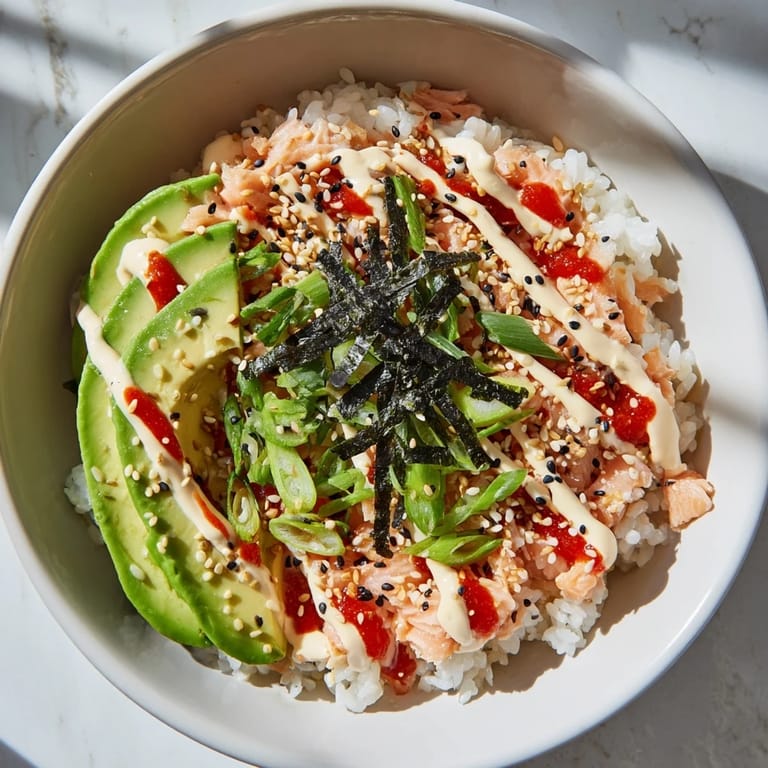
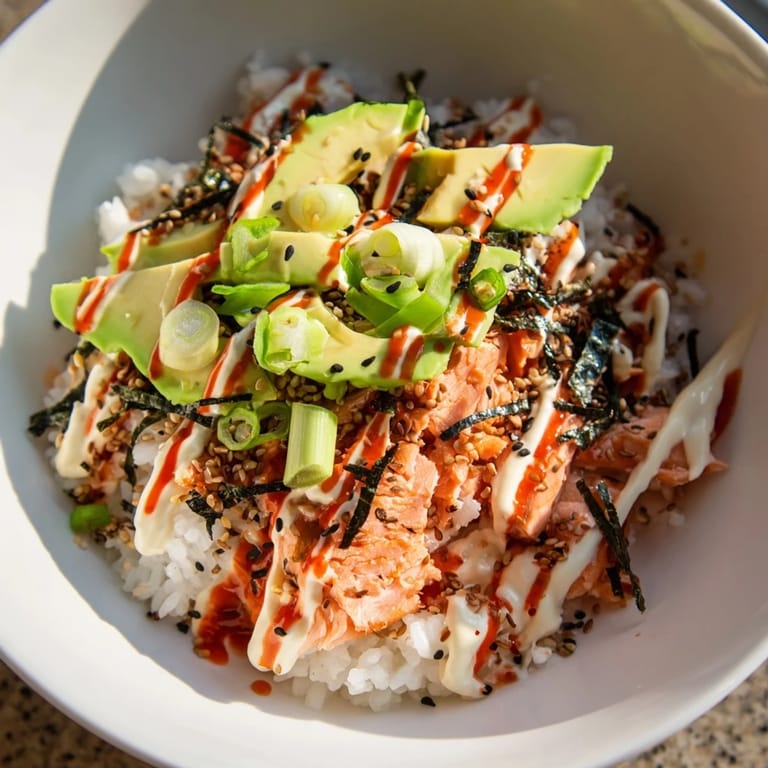
- Drizzle the Japanese mayo across the top in a thin stream, then add a small line of Sriracha if heat is calling your name. Don't stir yet; let people see what they're about to eat.
- Build your bowl:
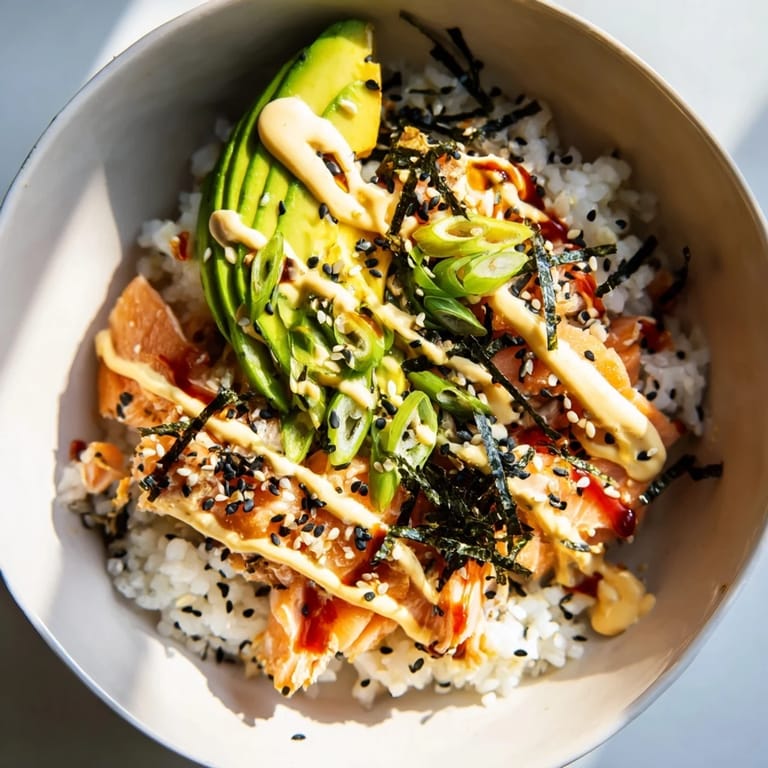
- Arrange avocado slices on top, scatter spring onions and sesame seeds, add pickled ginger if you have it. Take a moment and admire your work because it genuinely looks restaurant-ready.
- Serve and customize:
- Bring the nori sheets to the table as edible scoops—tear off a piece, load it up, and eat it like a hand roll. Squeeze lemon or lime over everything just before eating for brightness.
 Pin this
 The nori-scooping moment was when this went from a bowl I happened to make into something I actually craved. There's something primal about eating with your hands, wrapping salmon in seaweed, the way the flavors intensify when you're actively building each bite. It turned a solo lunch into something that felt intentional and a little bit ceremonial.
Making It Your Own
This bowl is a starting point, not a rulebook. I've added cucumber ribbons for crunch, stirred in kimchi for funkiness, scattered shredded carrots for color and sweetness. One time I swapped the white rice for brown and barely noticed the difference except for a more substantial chew. The beauty of this format is that it welcomes substitutions—smoked salmon if you want depth, canned salmon if you're being practical, even leftover roasted vegetables from last night's dinner.
Storage and Timing
This is best eaten immediately after assembly when everything is at its intended temperature and the nori is still crispy. If you're meal prepping, keep the components separate and assemble fresh each time—the rice and salmon keep fine in the fridge for three days, but putting them together earlier means soggy seaweed and sad textures by lunch tomorrow. Think of it as a five-minute assembly project rather than something you make ahead.
Dietary Swaps and Notes
Brown rice adds fiber and a nuttier flavor if white feels too mild, and swapping regular soy sauce for tamari keeps everything gluten-free without sacrificing depth. The mayonnaise is your main allergen concern, though there are egg-free versions out there if you need them. I've also made a version with roasted chickpeas instead of salmon on nights when I wanted the format without the fish, and honestly, it was still delicious.
- Always check your Sriracha bottle for gluten—many brands sneak it in without announcing it loudly.
- Smoked salmon works beautifully if fresh cooked salmon isn't available and adds an extra layer of flavor.
- Keep pickled ginger on hand even when you're not making this bowl; it transforms everything from scrambled eggs to grain salads.
 Pin this
 This bowl taught me that comfort food doesn't need to be complicated, and that the best meals are often built from what's already in your kitchen waiting for permission to shine. Make it tonight.
Frequently Asked Recipe Questions
- → Can I use different types of rice for this dish?
Yes, white rice works best for texture, but brown rice can be used for extra fiber. Just note it may alter the cooking time slightly.
- → Is it possible to prepare this without a microwave?
Absolutely. You can reheat the flaked salmon and rice gently on the stovetop, just combine and warm until heated through.
- → What are some good alternative toppings?
Try adding kimchi, shredded carrots, cucumber slices, or extra sesame seeds to enhance flavor and crunch.
- → How can I make this dish gluten-free?
Use tamari or a gluten-free soy sauce substitute to avoid gluten while maintaining savory notes.
- → What is the best way to serve the dish?
Serve with roasted seaweed sheets and lemon or lime wedges on the side to scoop up the mixture and add bright citrus flavor.